
1. Civil Ensigns
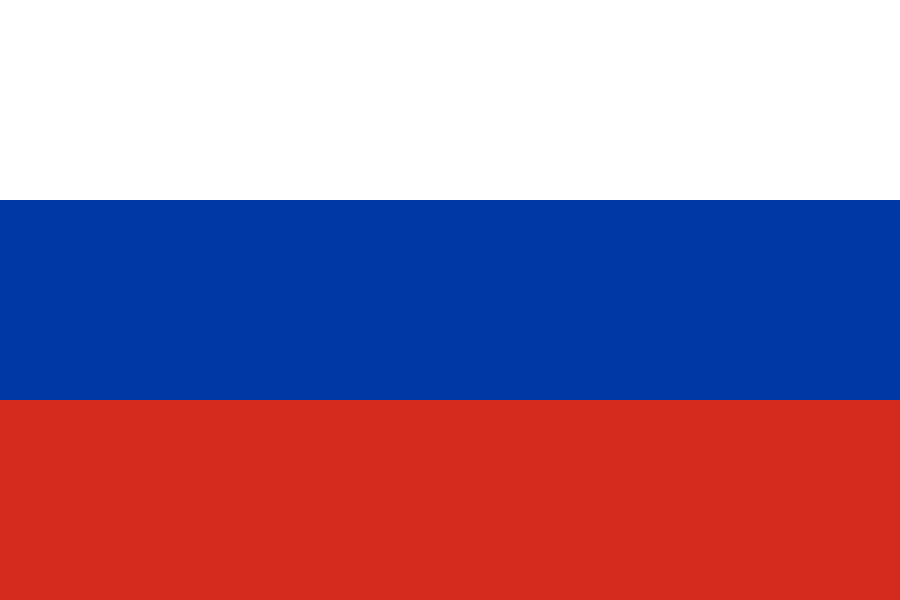
Finnish merchant ships used Russian civil ensigns. In 1862-63 a debate occurred in Finland regarding the adoption of a separate ensign for the Grand Duchy, but the proposal was refused during the Diet of 1863. In the first half of the 19th century, there were reportedly up to six different models of civil ensigns in use, all based on the basic Russian triband. The use of these flags apparently depended on which specific merchant division the ship was registered to. However, detailed information about these divisional allocations is lacking and partly unclear. It is known that the flag of the second division, which was the basic form of the Russian tricolour, was the most common in Finnish waters, but flags representing other divisions could also be seen, especially in the Gulf of Bothnia. However, after 1865, the tricolor of the 2nd division became the primary merchant flag, leading to a gradual decrease in the use of other models. [1]



2. Finnish Naval Equipage
This section has been hidden, because the source material is unreliable.
The Finnish Naval Equipages were marine units located in the Grand Duchy that comprised of Finnish soldiers. In 1830, the first Finnish Naval Equipage was established, and between 1854 and 1856, a second Finnish Naval Equipage was also temporarily in operation. The first Naval Equipage was converted into a Cadre Equipage in 1862 and was disbanded in the 1880s.
From 1831 to 1836, the Finnish Naval Equipage was part of the Imperial Navy’s Second Division which was located in the Baltic sea, and which had a blue flag with the naval ensign (blue saltire on white) in the canton. In 1837, the colours of the divisional flags were changed: the background of the Second Division’s flag was changed to red, and it was decreed that the naval ensign in the upper corner should be one-quarter the size of the entire flag. In 1841, the Finnish Naval Equipage was transferred to the Third Division, at which point its flag became white. [2]


2. Yacht club flags
The tradition of yacht club flags in Finland derives from those of the Russian Empire. The first Russian yacht club flag was confirmed in 1846, when the Imperial Yacht Club of S:t Petersburg was founded. The club’s flag was white with a blue cross and the naval jack in the canton. The flag was inspired by the White Ensign of the British Royal Yach Squadron, as well as the Russian naval flag with a blue St. Andrew's cross on white. In 1860 the St. Petersburg River Yacht Club was founded. It adopted the same blue cross flag, but the canton included the coat of arms of St. Petersburg. Subsequent yacht club flags would follow this same design: a blue cross flag with a local coat of arms in the canton. [3]


Finland’s first yacht club was Nyländska Jaktklubben (NJK) which was founded in 1861 in Helsinki. The club was granted its own flag in the Russian style: a white flag with a blue cross and the coat of arms of Nyland/Uusimaa province in the canton. Soon afterwards more clubs were established in different parts of the country, and each club would use their local city or province coat of arms in the flag. [4]

Some yacht clubs also attempted to obtain permission for flags with different designs, such as the Airisto and Pori clubs, which wished to adopt Dagblad’s flag proposal from 1863. The Tavastian Yacht Club wanted a simple white flag with the coat of arms of Tavastia in the middle. Östra Nylands Segelförening wanted the NJK flag, but with an additional yellow cross on top. These plans, however, were not successful, and all yacht clubs were granted the same official blue cross flag with coats of arms instead. [6]

Airisto Yacht Club, 1865.

Tavastia Yacht Club, 1873.

Östra Nylands Segelförening, 1889.
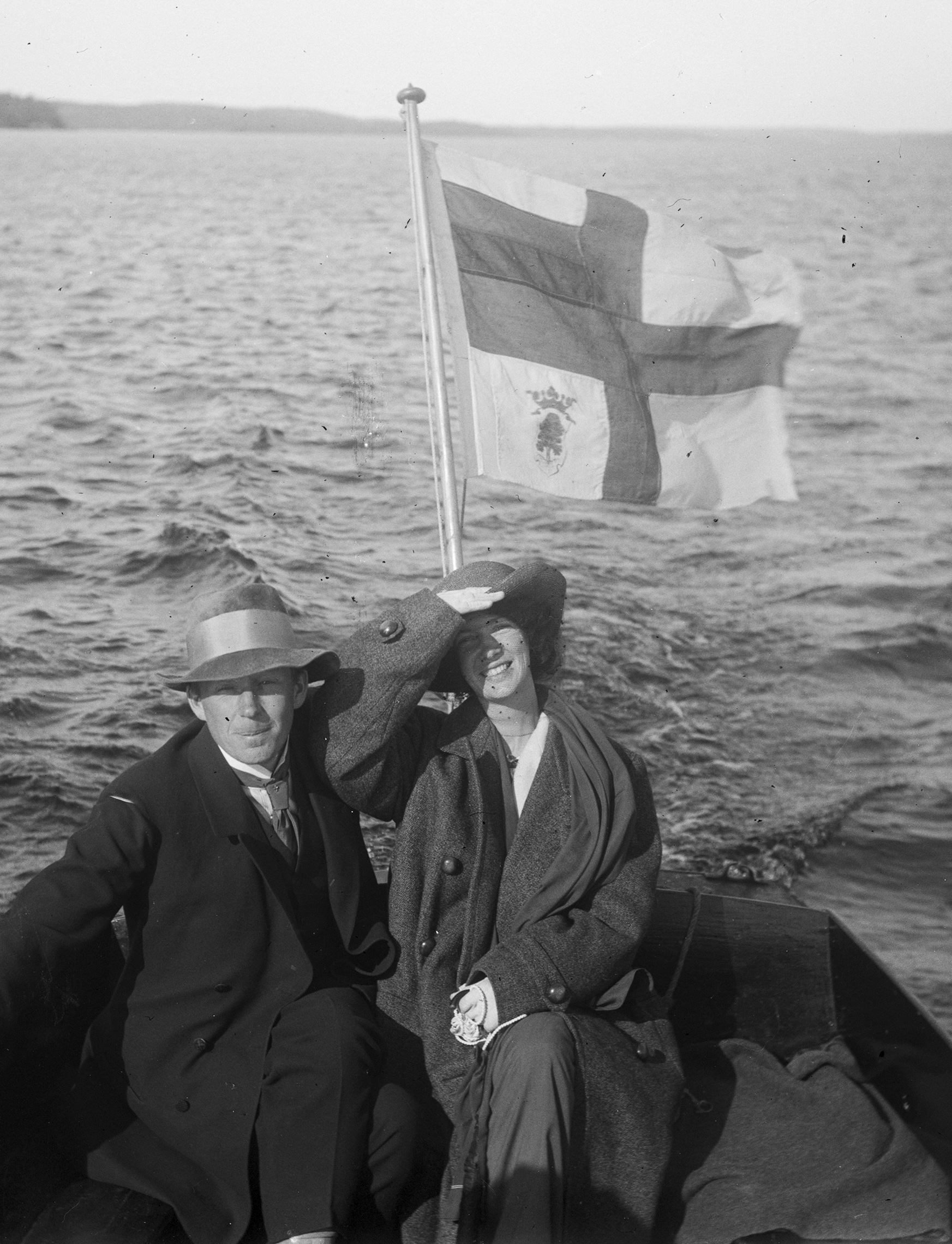
By the beginning of the 20th century about one third of the yacht clubs of the Russian Empire were Finnish, and on the Baltic Sea most of the Russian yachting fleet was Finnish. For this reason yacht club flags came to be closely associated with Finland. In 1910 it was decreed that the clubs’ flags were to be provided with the Russian tricolour in the upper canton, while the club’s emblem was moved to the lower canton. This change was resisted in Finland, and the new canton came to be called the “slave mark”. [7] [8] After independence the yacht club flags were altered in order to distinguish them from the new national flag. The blue cross was widened and a narrower white cross was placed upon it. The slave mark was removed, and the yacht clubs’ emblems once more placed in the upper canton. [9]
The modern Finnish flag and the Russian yacht club flags resemble one another and have partly a common background, but the Finnish flag was not adopted due to its likeness to the yacht flag. The colours of the Finnish flag originated from Zacharias Topelius’s efforts in the 1850s and 1860s to establish blue and white as Finland’s national colours. His choice of colours is generally understood to have been inspired by Russian blue and white maritime flags, in particular the naval ensign of St. Andrew, which also inspired the yacht club flag. During the Crimean War, when suspicion existed in Russia that Finland’s Swedish-oriented conservative elite might turn the conflict into an opportunity for separatism, Topelius’s introduced these colours as a signal of loyalty to the Emperor. Later in the century, the Fennoman movement took up blue and white as symbols of Finnish nationalism and employed them in their own flags, although often in forms other than the cross. After independence, these colours were chosen as the colours of the Finnish national flag. The fact that the Finnish flag also resembles the old yacht club flags in form is partly coincidental: the colours came from the same source, but the cross was chosen above all to associate Finland with the other Nordic countries. Supporters of the blue and white cross flag wanted to create a flag that would unite the blue and white colours of Finnish national identity with the Nordic cross flag tradition.
You can read more about the origin of Finland’s colours here and about the birth of the blue cross flag here.
3. Finnish Customs
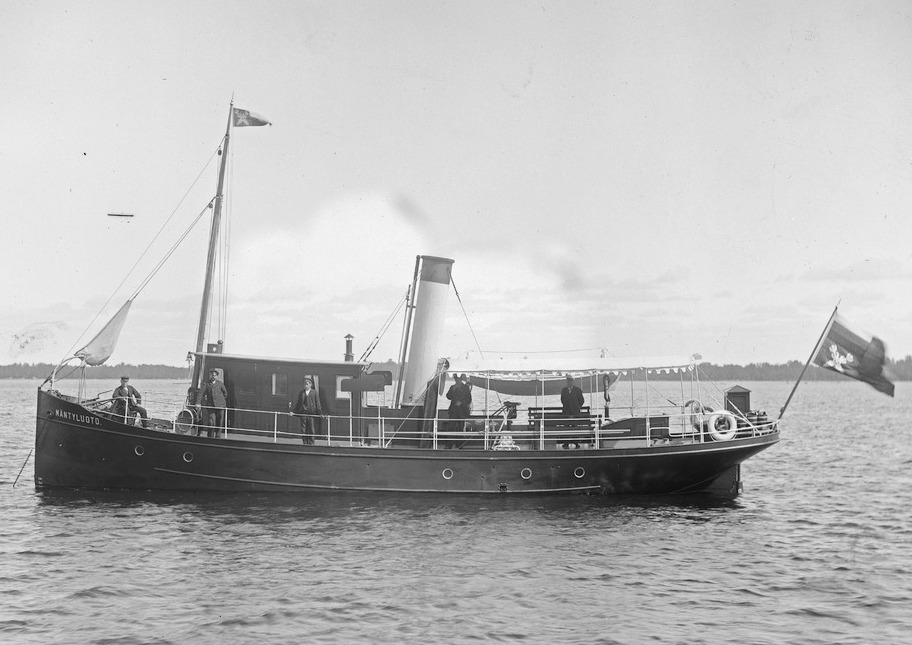
The flag of Finnish Customs was confirmed for use in 1813. The flag was blue and beneath its upper hoist quarter there were two white crossed caduceus staves. The flag was used as an ensign on customs vessels as well as on customs houses. The caduceus had already been used as the symbol of Customs since the 18th century, for example on seals and official insignia, and it was now also adopted for the flag. In 1872 the Finnish Customs flag became the customs flag of the entire Russian Empire. This meant that Finland no longer had its own separate customs flag, but the same emblem was used throughout the Empire. In addition to the customs flag there was also a customs pennant, confirmed on 4 May 1899. The pennant was a swallow-tailed Russian tricolour, in the hoist-side blue field of which were two white crossed caduceus staves. [10]


4. Finnish Pilot and Lighthouse Service
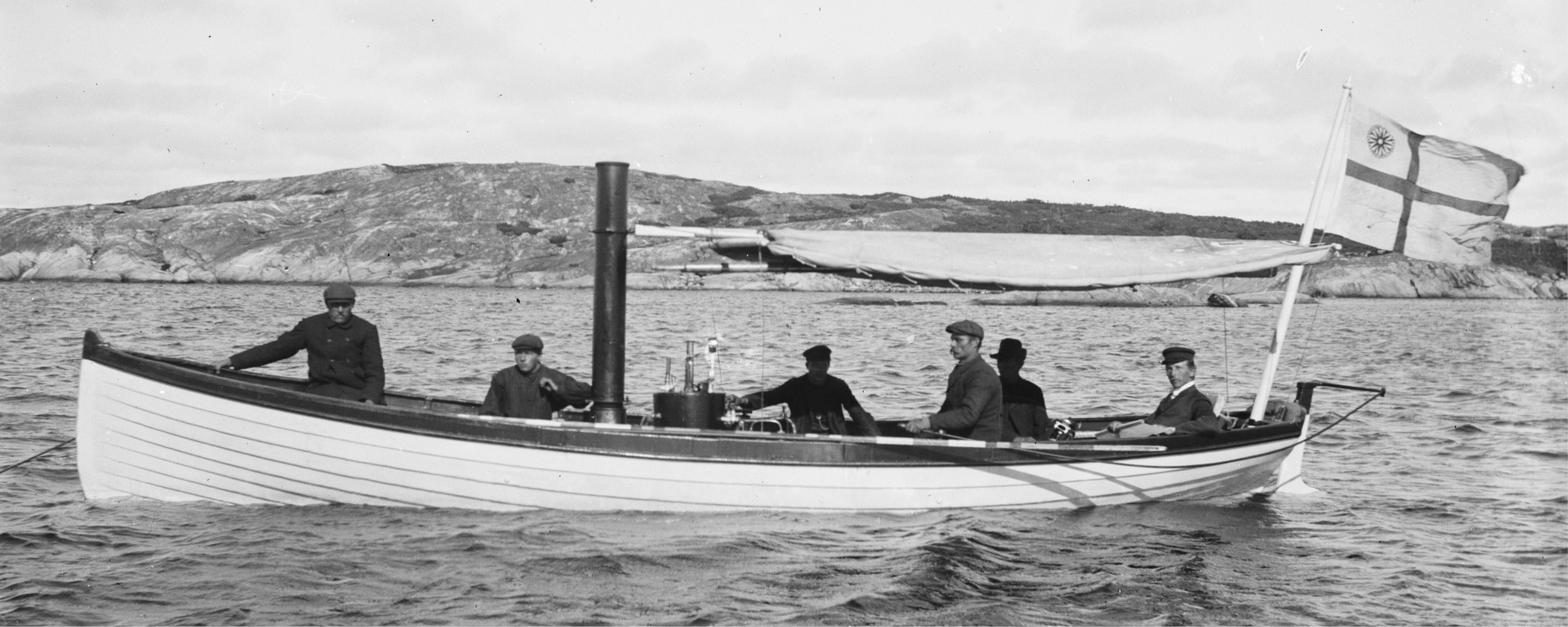
In 1883 the Pilot and Lighthouse Service was granted its own flag. The flag was a white flag with a blue cross, in the upper hoist canton of which was a black compass rose. In Russian flag charts it was defined as the flag of the Finnish shipping, lighthouse and pilot authority. This flag was at first used only in Finland, but from 1895 it became the official flag of the Pilot and Lighthouse Service of the whole Empire. The flag remained in use until 1912. [11]

In 1912 the blue cross flag with a compass was removed from service and was replaced with blue flags. If a vessel was commanded by a naval officer, the flag would have a St Andrew’s cross in the upper hoist canton. If the vessel’s master was a civilian, such as a ship’s captain or mate, the blue merchant ensign was used, with the Russian tricolour in the upper hoist canton. These flags were used on Pilot and Lighthouse Service vessels until Finland’s independence in 1917. [12]
when the pilot vessel was commanded by an officer.
when the pilot vessel was commanded by a civilian.
In 1899 there were also confirmed a pennant for pilot vessels and a pennant for the director of the Pilot Service. The pilot vessel pennant was a swallow-tailed Russian tricolour, in the white field of which was a black compass rose. The director’s pennant was a broad white flag with a blue cross, bearing the same compass rose emblem. In addition to these flags, in 1832 a separate station flag for lightships (lighthouse vessels) was confirmed. It was a yellow flag with a blue cross. It was hoisted on a vessel’s mast when the ship was anchored at its station, but was not permitted to be flown when the vessel was under way. Originally this flag was also to be hoisted on the mast of a merchant ship when arriving from the sea on the main fairway to St Petersburg. The flag remained in use in Finland until independence and in Russia until the 1920s. [13]


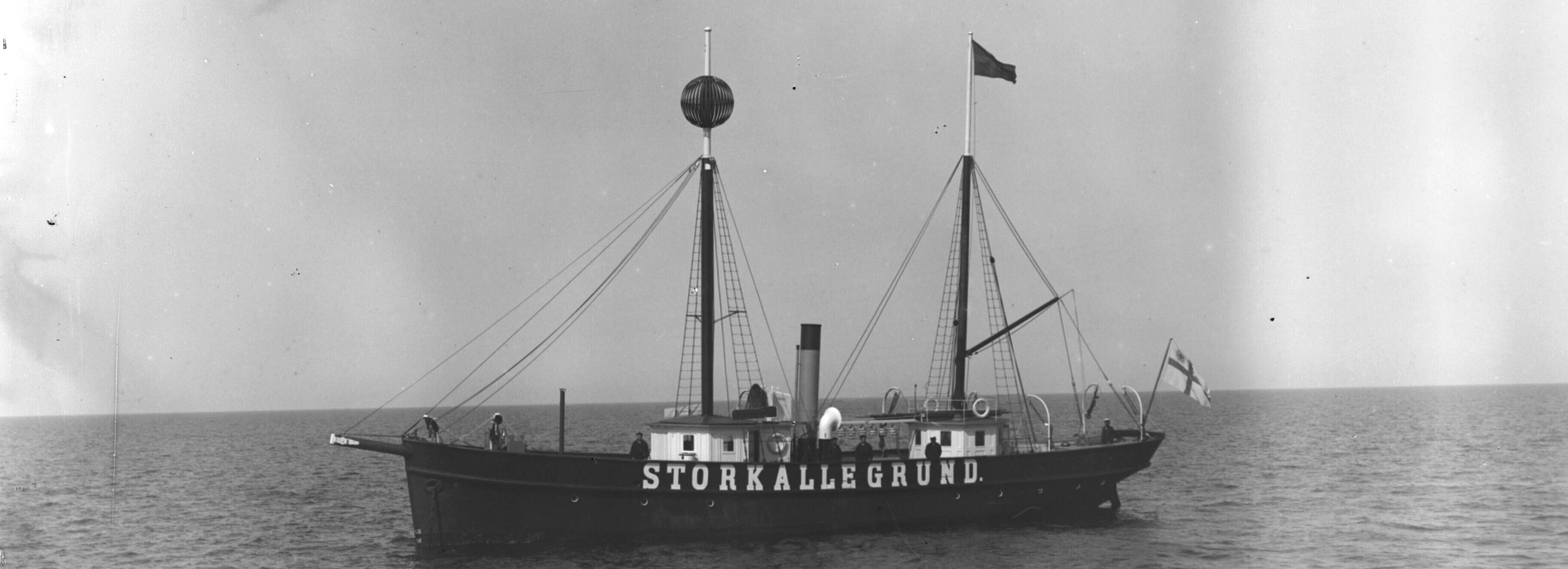
5. Finnish Post

In 1878 a decree was issued concerning the postal flag. According to it the flag was white and swallow-tailed. In the upper hoist canton was the Russian merchant ensign and beneath it a yellow post horn. This flag was not a national ensign but a masthead flag, hoisted only when the vessel was carrying mail. The Russian merchant ensign continued to be used as the ensign at the stern. [14]
6. Finnish Lifeboat Society
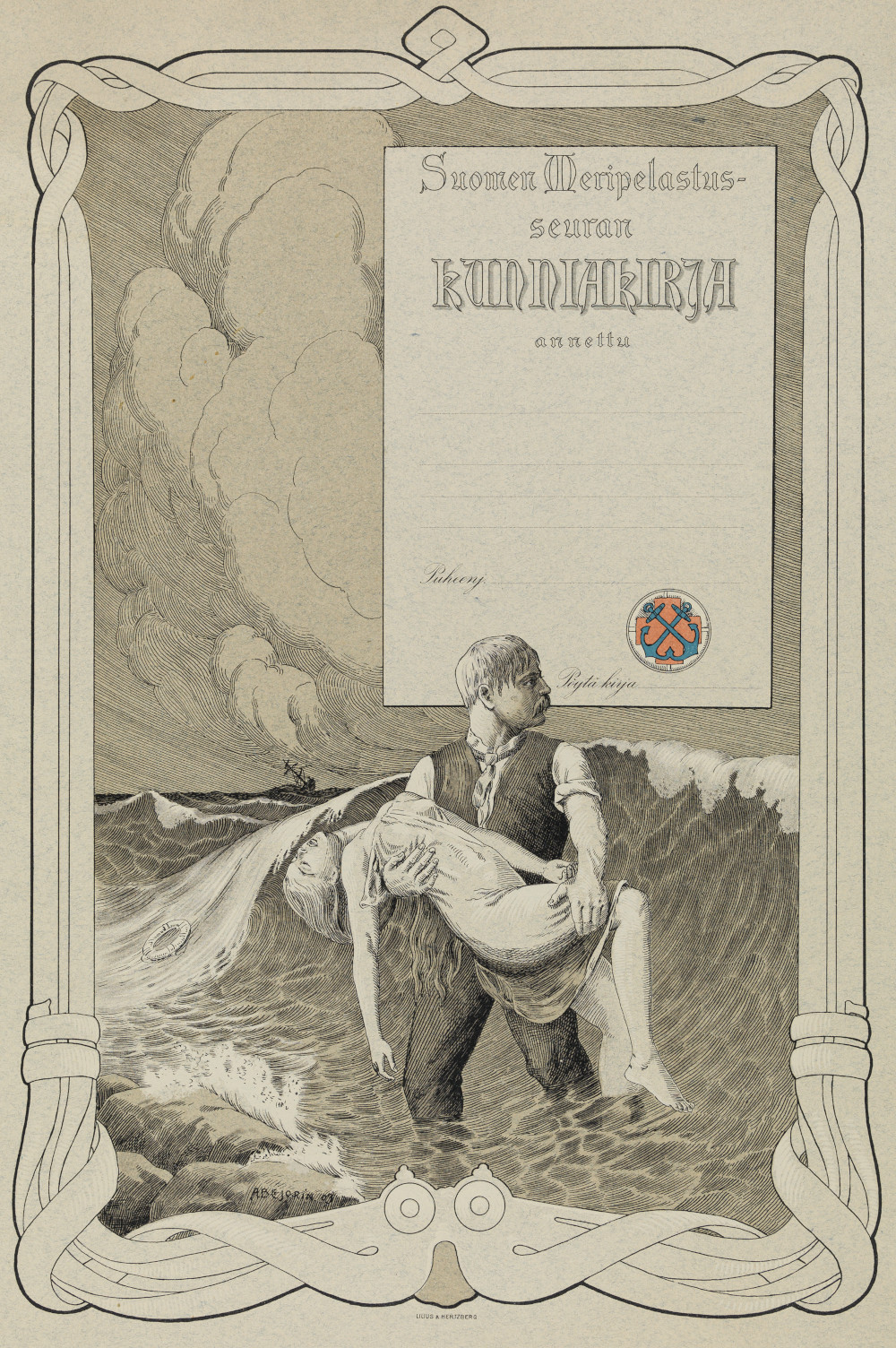

The roots of sea rescue activity reach back to early 19th-century England, from where the idea gradually spread across Europe. It reached Russia in the 1850s, and it is said that Empress Maria Feodorovna was an enthusiastic supporter of the cause. The Russian Shipwreck Rescue Society developed into a large organisation with over 150 rescue stations, including some in Finland. Its flag was the Geneva Convention’s Red Cross flag, to which blue anchors were added, and from 1894 onwards also the imperial crown.
In Finland, organised sea rescue work became established on 27 March 1897, when the founding meeting of the Finnish Lifeboat Society was held in Helsinki. The Senate had already approved the society’s rules in February of the same year. The first stations were set up at Lavansaari (1898), Valassaaret (1902) and Pitkäniemi off Koivisto (1903). The Lifeboat Society worked in close cooperation with the Pilot Service. Under the agreement, the Pilot Service provided boats, while the Lifeboat Society was responsible for hiring and paying the crews. In this way, as many as ten pilot stations could also serve as lifeboat stations.
The flag of the Finnish Lifeboat Society was approved on the 20th of February, 1899. The original draft had included a crown and a lifebuoy, but these were removed. The final design was a white flag with a red cross set over two crossed blue anchors in the upper hoist corner. [15]
7. The Finnish Ship Officers’ Union

The Finnish Ship Officers’ Union was founded in 1905 to represent maritime officers. In 1906, the union decided to adopt its own member flag, which its captain members would display on their ships. The first flag chosen had a red background with a yellow anchor. However, later that same year, the flag was changed, as there were concerns that the original design might give the false impression that the union supported anarchism or socialism. The new flag had a green background, featuring a white anchor, two white hands shaking, and a red membership number. [16]
 Top
Top